Introduction
The superior strength characteristics of Carbon Fiber Reinforced Plastics (CFRP) have positioned them as an attractive alternative to conventional metals, supporting widespread adoption in industries requiring lightweight, high-strength properties—aerospace, automotive, and sporting equipment.
In this column, we delve into the strength properties of CFRP, focusing on the structural properties, calculation methods, and various applications.
What is CFRP Strength?
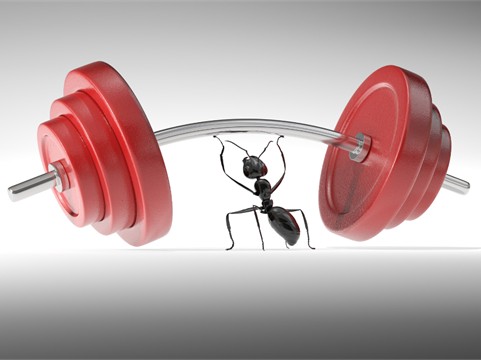
The strength of CFRP is primarily determined by the combined performance of carbon fibers and resin. Carbon fibers exhibit very high tensile strength (resistance to tearing), significantly exceeding that of steel or aluminum. However, CFRP strength also depends greatly on the fiber orientation, resin type, and manufacturing method, meaning that application-specific design is essential when manufacturing CFRP.
Tensile Strength
Tensile strength describes a material’s ability to withstand forces that pull or stretch it. Carbon fiber—the primary reinforcement in CFRP—possesses exceptionally high tensile strength, making CFRP well-suited to strength-critical components, such as aircraft wings and automobile chassis.
– Features: Often 2–3 times or more tensile strength than steel.
– Applications: Aircraft, sporting goods, automotive parts
Compressive Strength
Compressive strength indicates the material’s ability to withstand compressive forces. While CFRP inherently possesses excellent tensile performance, the compressive strength depends strongly on fiber configuration (direction) and manufacturing methods.
Parallel alignment of fibers can increase compressive strength; however, any misalignment or deviation from the load path can also make the material more susceptible to failure under excessive compression. Therefore, careful application-specific design considerations are essential.
– Features: Compressive strength is slightly lower than tensile strength, but can be enhanced with optimized design.
– Applications: Aircraft flaps, engine components
Flexural (Bending) Strength
Flexural strength refers to resistance against deformation under bending loads from vertical or transverse forces. CFRP boasts high flexural strength relative to its low weight and is therefore widely employed in components subjected to bending stresses (loads), such as aircraft wings and automotive structural parts. Flexural performance can be further improved by optimizing the fiber orientations with respect to the applied loads of the application.
– Features: High flexural strength with low weight
– Applications: Reinforcements for automotives, sporting equipment, and buildings.
Factors that Increase CFRP Strength
The strength of CFRP is influenced not only by the performance of the carbon fibers, but all by numerous design and manufacturing factors.
Fiber Orientation
The direction of the carbon fibers strongly influences CFRP strength. Maximum strength is achieved when fibers are aligned with the loading direction; whereas any misalignment or deviation from the load path can significantly reduce the strength. This makes precise control of the fiber direction in respect to the product specification essential.
– Impact: Strength is maximized when the fiber direction aligns with load direction (path).
– Applications: Structural components and high strength-critical parts.
Resin Type
Various polymer resins are used in CFRP, including epoxy, vinyl ester, and polyester resins, each providing different strength characteristics. Epoxy resins offer particularly high strength and durability and are commonly used in aircraft and high-performance automotive components.
– Impact: Resin selection significantly impacts the strength properties of CFRP.
– Applications: Aircraft and sporting equipment with high strength requirements.
Manufacturing Method
Manufacturing processes are also a key determinant of CFRP strength. Techniques and methods such as autoclave molding or Resin Transfer Molding (RTM) alter the internal structure of the composite and can enhance its strength for specific applications, making precise control of temperature and pressure during manufacturing essential to achieving optimal performance.
– Impact: Manufacturing method influences material density and strength.
– Applications: Aircraft, automotive components, sporting equipment.
Evaluating CFRP Strength
CFRP strength is evaluated using various mechanical testing methods—most commonly tensile, compression, and flexural (bending) tests. These tests enable quantitative assessment of the tensile, compressive, and flexural performance under specific and controlled conditions.
Tensile Test
The tensile test evaluates the maximum tensile strength of a material by applying a controlled pulling load. CFRP typically exhibits exceptionally high tensile strength, supporting its use in structural components that require low weight with high load-carrying capacity.
Compression Test
In the compression test, compressive force is applied to the CFRP until the deformation or fractures occur. The results indicate the material’s capacity to withstand compressive stresses in various structural applications.
Flexural Test
The flexural test subjects the CFRP specimen to bending loads and measures its resistance to deformation or fracture. This test is widely used to evaluate components subjected to flexural (bending) stresses, such as automotive parts and sporting equipment.
CFRP Strength Applications
The superior strength of CFRP enables its use across diverse industries. Typical applications include:
– Aircraft: CFRP is used in structural components of aircraft wings and fuselages to reduce weight and increase structural strength. This improves fuel efficiency and reduce operating costs.
– Automotives: CFRP is used in automobile chassis and body structures to reduce weight while ensuring crash safety.
– Sporting Equipment: CFRP is widely used in competitive sporting equipment—such as bicycle frames, golf clubs, tennis rackets—to improve athletic performance.
– Building Reinforcements: CFRP is also used for seismic strengthening and structural reinforcement of buildings to improve durability and strength.
Summary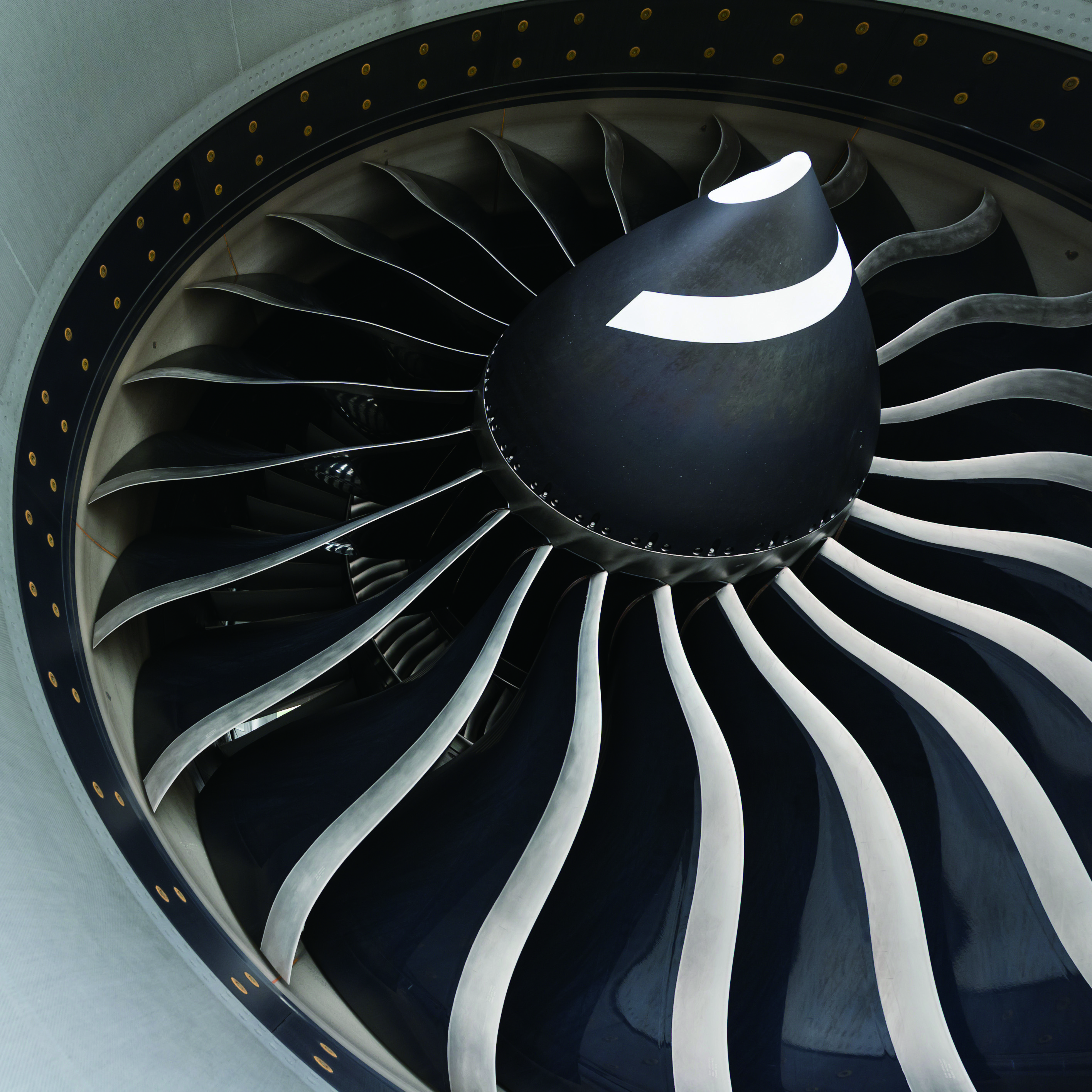

CFRP is employed across diverse industries as a lightweight, high-performance material with remarkable tensile, compressive, and flexural strength. These properties can be optimized through precise fiber configuration, resin selection, and manufacturing methods, enabling innovative product development and advanced structural applications. New technologies and products utilizing the strength of CFRP are expected to continue emerging in the future.
Related useful contents
You can explore related content by clicking on a topic of interest.
ABOUT UCHIDA - 55 years since our founding
We leverage a wealth of technical expertise as a CFRP molding and processing manufacturer using FRP, GFRP, and CFRP materials. We offer a one-stop solution, encompassing design, analysis, manufacturing, secondary processing, assembly, painting, quality assurance, and testing.
UCHIDA's equipment
We have cutting-edge equipment to ensure that we can address even the most advanced challenges of our customers.
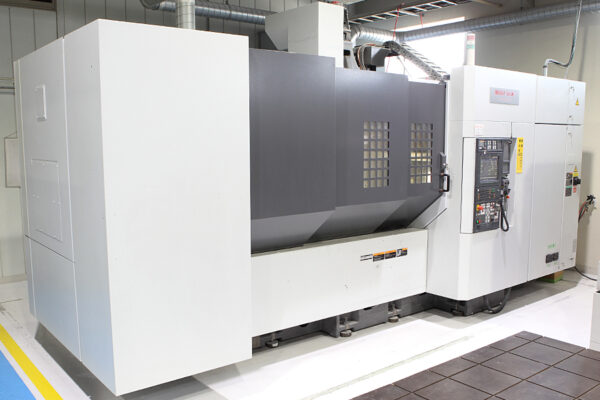
DMG森精機 - VS1000/40/2050
X軸:2,050mm(ストローク) / Y軸:1,000mm / Z軸:600mm / テーブル作業面:2,250×1,000mm
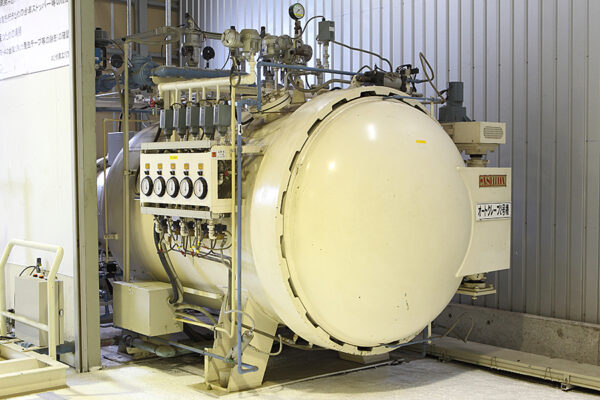
ASHIDA MFG Co., Ltd.
Autoclave Oven 2
Size : Ø1,150x1,000mm / Operating temperature : at normal temperature - 400℃ / Design pressure : 2.0Mpa (maximum working pressure) / Vacuum system : back suction system / Vacuum units : 5
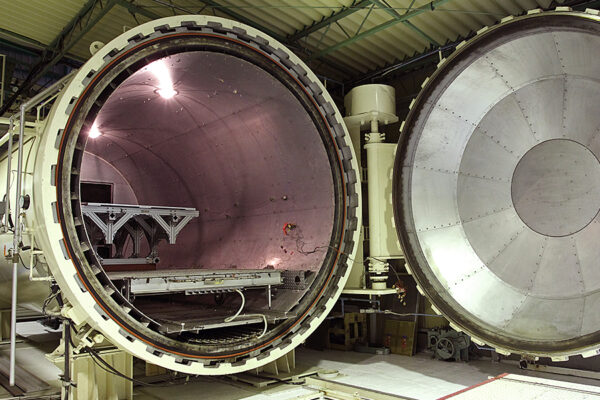
ASHIDA MFG Co., Ltd.
Autoclave Oven 3
Size : Ø3,000x6,000mm / Operating temperature : at normal temperature - 200℃ / Distribution accuracy : ±2.5℃less / Heating rate : 4.0℃/min. (empty furnace) / Cooling rate : 4.0℃/min. (empty furnace) / Design pressure : 0.99Mpa (maximum working pressure) / Working pressure : 0.7Mpa less (if no specification from the manufacuturer 0.3Mpa around) / Pressure accuracy : ±0.02Mpa(for pressure setting of 0 - 0.99Mpa/cm²) / Boost pressure accuracy : 0 - 0.03Mpa/min / Pressure source : compressed air (regular use) / Vacuum system : back suction system / Vacuum units : 10
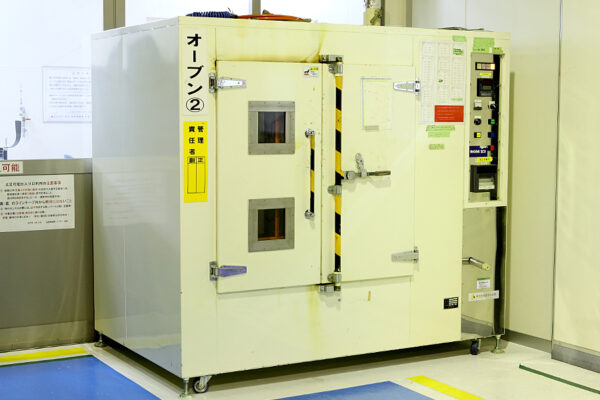
Oven
Size : W1,000xH1,000xD1,000mm / Temperature range : Environmental Temperature +20 - 300℃ / Temperature elevation capability : Environmental Temperature (20 - 40℃) - 300℃ / 45min less / Vacuum system : back suction system / Vacuum units : 10
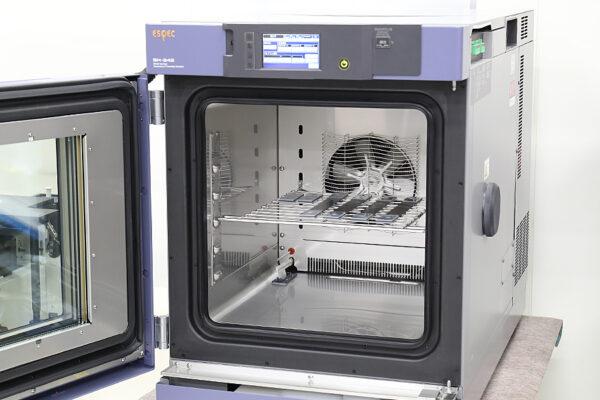
ESPEC CORP.
Temperature & Humidity Chamber
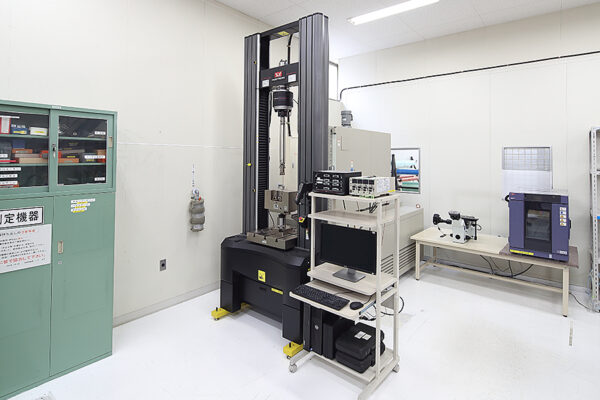
INSTRON
Static Universal Testing Machine 5985
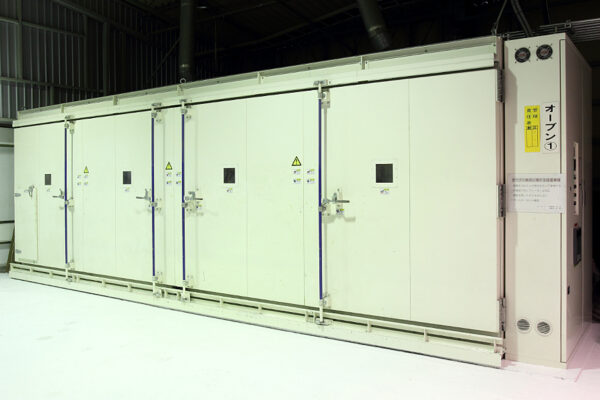
Oven
Size : W7,000xH3,000xD2,000mm / Temperature range : Environmental Temperature +20 - 300℃ (Max) / Temperature elevation capability : Environmental Temperature (20 - 40℃) - 300℃ / 60min less / Vacuum system : back suction system / Vacuum units : 10
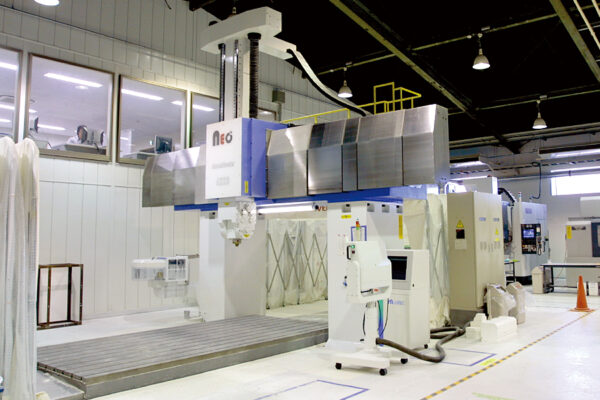
NEO
X axis : 4,000mm (stroke) / Y axis : 2,000mm / Z axis : 1,200mm / C axis : 0° - ±270° / B axis : 0° - ±110° / Table working place : 4,000x2,000mm
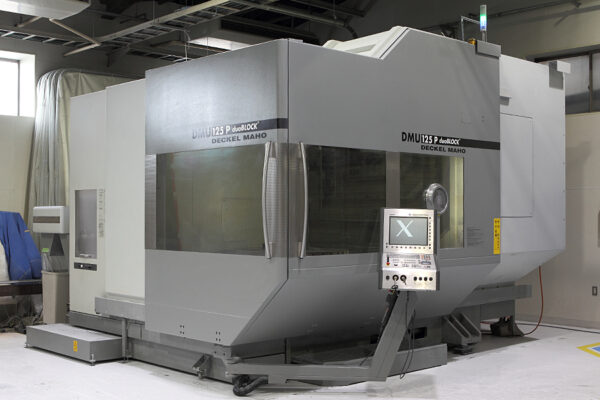
【開発】
3Dプリンター | Markforged
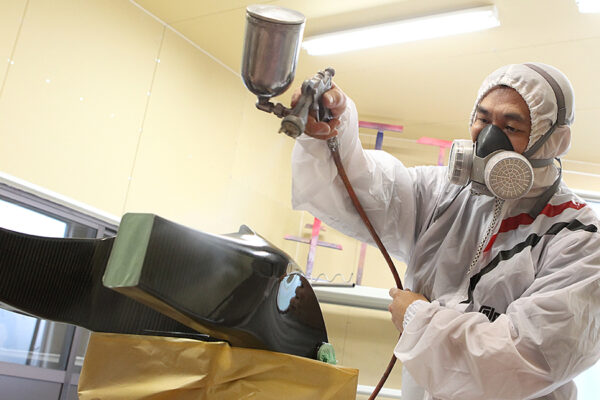
Painting booth
Various painting, and clear finish is done in dedicated painting booth
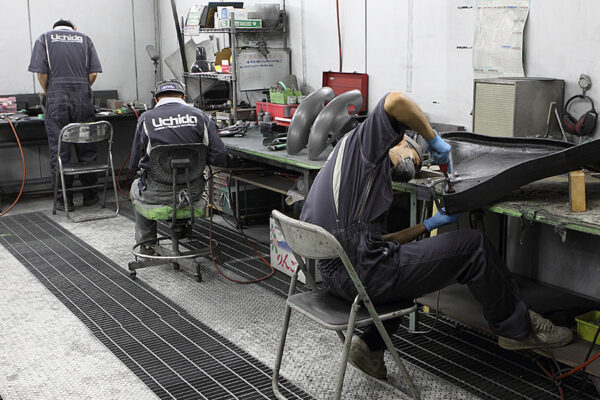
Adhesion, Finishing, Coating Room
Finishing process, such as trimming, drilling, and bonding, surface treatment of the molded product type and is done in a private booth
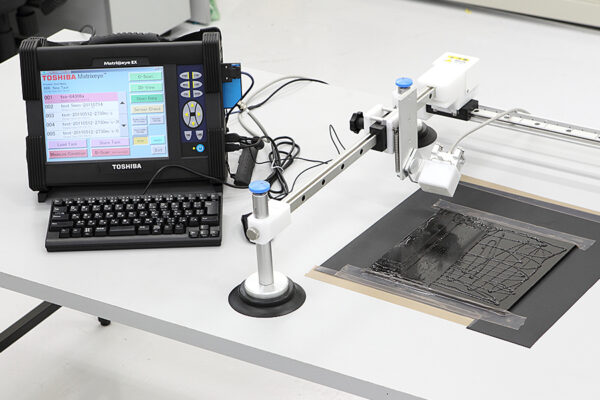
Toshiba Matrixeye EX (Ultrasonic flaw detector)
Matrix-Arrey : 32
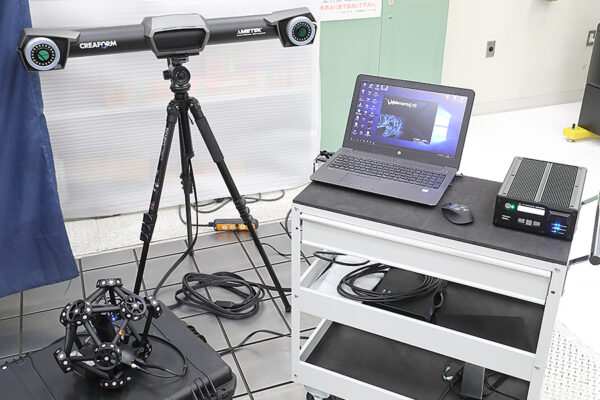
AMETEK CREAFORM Metra
SCAN750 Elite (3D scan)
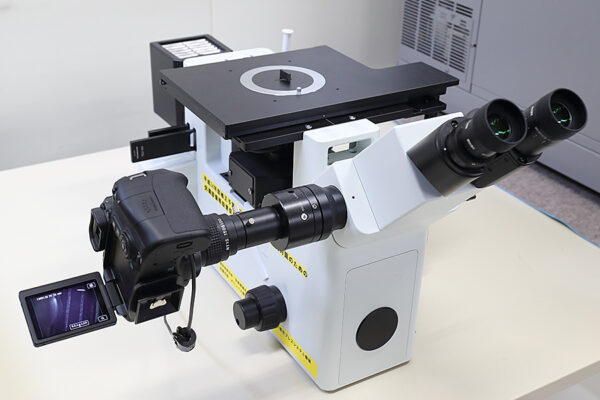
Olympus Corp.
Inverted Microscopes
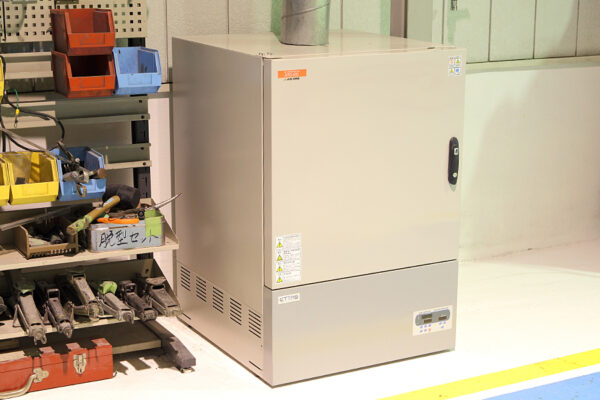
Oven
Size : W450xH450xD450mm / Temperature range : Environmental Temperature +20 - 650℃ / Temperature elevation capability : Environmental Temperature+50 - 650℃/120min less
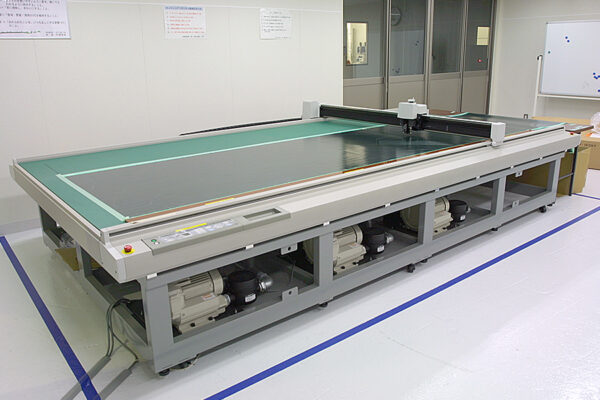
Cutting Plotter Table working place : W1,500xL3,500mm
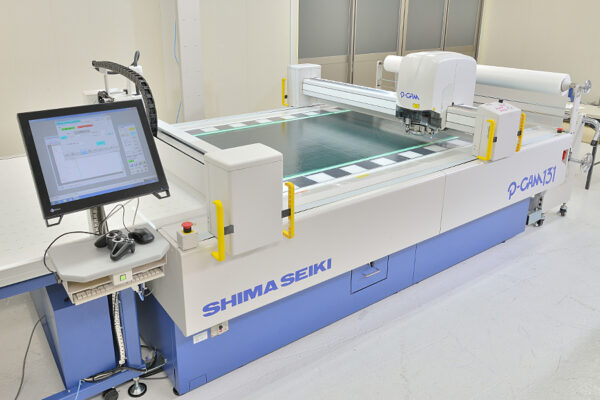
SHIMA SEIKI MFG., LTD
Cutting Plotter
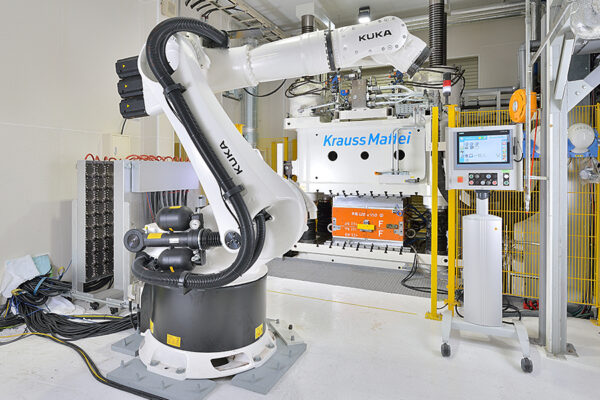
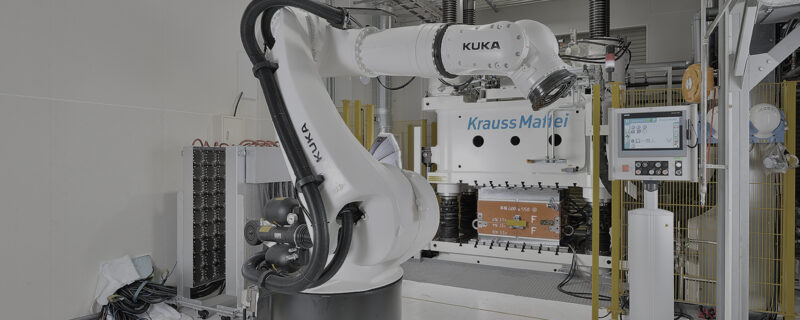
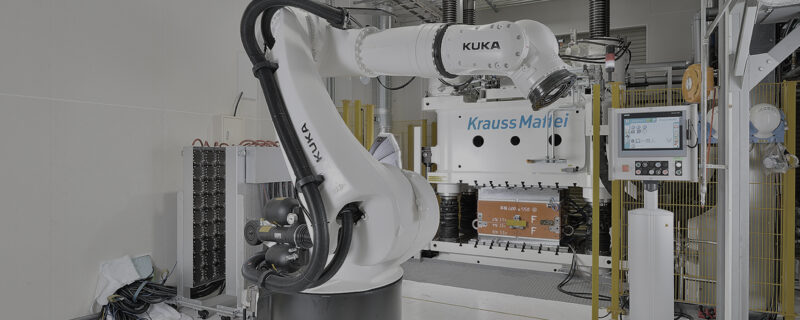
KUKA
Robot
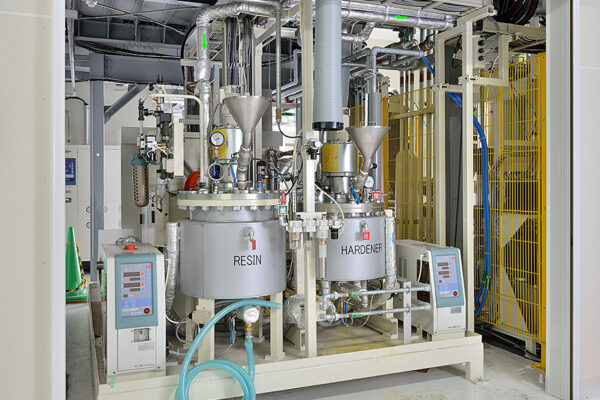
Krauss Maffei
Epoxy resin injection machine Resin 60L / Hardener 25L
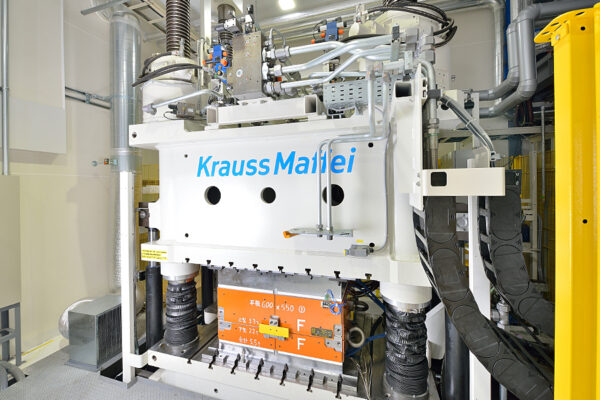
Krauss Maffei
630t Press machine Height total 5,200mm / Length max 1,500mm / Width max 1,200mm / Whole cycle time per component part 240sec
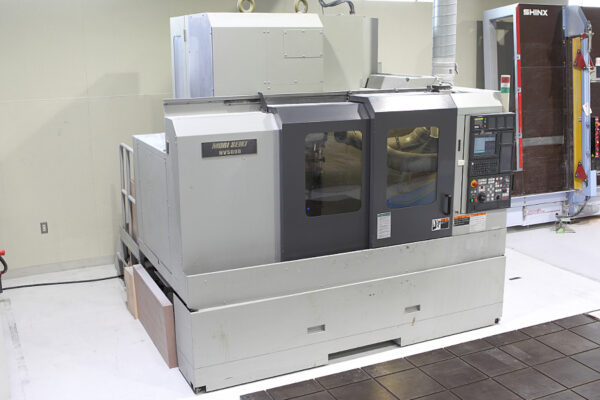
DMG森精機 - NV5000B/40
X軸:1,020mm(ストローク) / Y軸:510mm / Z軸:510mm / テーブル作業面:1,320×600mm
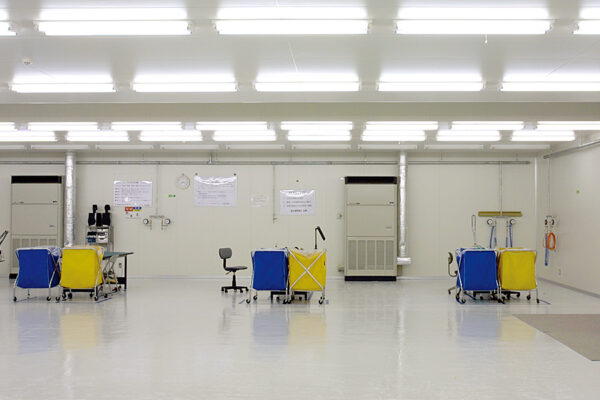
Big sized clean room
JIS B 9920 cleanliness class maximum concentration (Pcs/m³) / Class 5 : 100,000m³ / Capacity : m² (16,000x16,000mm) 760m² (16,000x16,000x3,000mm) / Temperature and humidity condition : Temperature : 23℃±3℃, Humidity 65% less / Ambient conditions : Temperature 35℃ during summer, Humidity 70% less / Ambient conditions : Temperature 35℃ during summer, Humidity 70% less / Temperature -5℃ during winter, Humidity 40% less
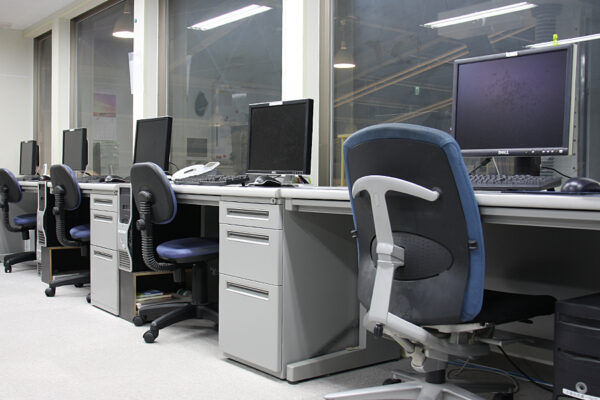
CAD / CAM
CATIA V5 : 2 / THINK DESIGN : 1 / MASTER CAM : 4 / Other 3D/CAD : 3 / Other 2D/CAD : 5
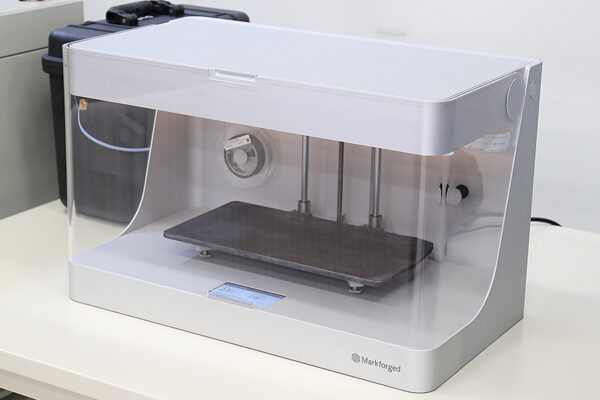
Markforged - 3D Printer
Video Library
In the following video, we provide a detailed overview of our manufacturing process. Please feel free to watch and learn more.
Contact us